SOLUTIONS TO ACCELERATE INDONESIA’S DECARBONIZATION


Rieckermann successfully concluded their “Accelerating Indonesia’s Decarbonization: The Value of Low-Quality Feedstocks for Biofuels & Oleochemicals” seminar, bringing together key industry stakeholders for a fully booked event that reflected the growing interest in sustainable industrial transformation.
Held in partnership with the Asosiasi Produsen Biofuel Indonesia (APROBI), the seminar served as a platform for in-depth discussions on Indonesia’s decarbonization journey, with a focus on practical solutions and technologies that support the region’s transition toward lower-carbon operations.
Advancing Feedstock Flexibility and Circularity
A key focus of the seminar was the increasing role of alternative and waste-based feedstocks in achieving sustainability targets. Rieckermann and their partner, BioEnergy International (BDI) shared insights into their Advanced Pre-Treatment technologies that enable the processing of lower-grade and waste oils, helping producers improve feedstock flexibility while supporting circular economy principles.
These solutions are becoming increasingly important as industries seek to optimize resource use and reduce reliance on conventional raw materials.
Optimizing Biodiesel Production Assets
The seminar also addressed the need to enhance existing biodiesel production capabilities through retrofit solutions and plant performance assessments through sessions with BDI and GKT (formerly GIG-Karasek). Participants gained valuable understanding into how targeted upgrades and inspections can improve operational efficiency, increase output, and ensure alignment with evolving sustainability requirements.
Such approaches allow producers to maximize the value of their existing assets while adapting to stricter environmental standards.
Enabling Innovation in Oleochemicals
Furthermore, Rieckermann and KVT showcased their integrated solutions for the oleochemical industry, highlighting technologies that support process optimization, product quality, and diversification. The sessions explored regional market trends and regulatory developments, giving attendees a forward-looking perspective on how to stay competitive in a rapidly evolving landscape. Discussions also highlighted the potential of renewable materials derived from low-quality feedstocks such as rice husk and industrial-grade glycerin.
Strong Engagement Reflects Industry Momentum
The event reached full capacity, signaling heightened interest from industry players across the oleochemical and biofuels sectors. Attendees actively engaged in discussions, exchanging perspectives on current challenges and opportunities in reducing carbon footprints while maintaining operational efficiency.
In addition, interactive sessions and networking opportunities enabled participants to connect directly with technical experts, fostering meaningful dialogue on how to implement decarbonization strategies in real-world applications.
Supporting Transition Through Collaboration
Held on May 5 at the Grand Mercure Kemayoran, Jakarta, the seminar reinforced Rieckermann’s commitment to supporting industry players in navigating the complexities of decarbonization. By combining engineering expertise, technology partnerships, and local market knowledge, the company continues to enable the implementation of sustainable and commercially viable solutions.


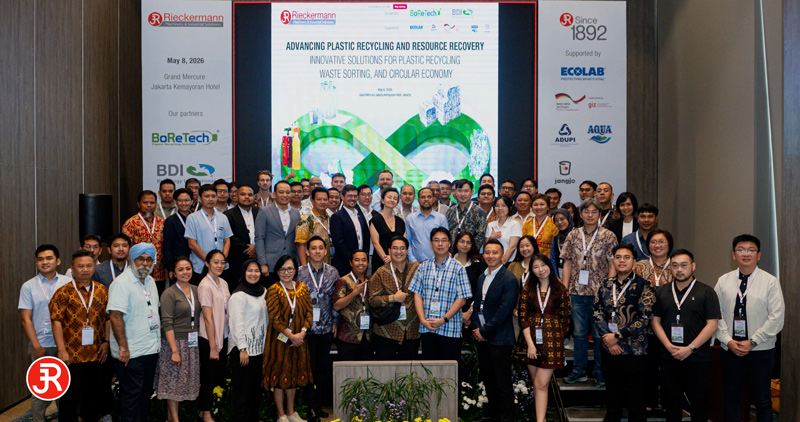 RIECKERMANN PRESENTED ADVANCED PLASTIC RECYCLING SOLUTIONS FOR CIRCULAR ECO...